Showing posts with label on line activities. Show all posts

25 May 2020

Today, opposites!


Let's practice opposites today. Words with opposite meanings: You already know many of them (happy / sad, fast / slow, big / small...) and others will be new (soft / hard, empty / full...). Pay attention to the image above and also to this fun song.


Now you can do these simple activities: here, here and here.
Resumen tareas: «Today, opposites!» (26-5-20)
—Observar y leer atentamente la ilustración inicial que ofrece parejas de antónimos. Los niños ya conocen muchas y outras son nuevas.
—Ver y escuchar también la canción del vídeo «Opposites song».
—Realizar las actividades on line propuestas:
 aquí, aquí y aquí.
—Enviar una foto de estas actividades a fogarnews@gmail.com

21 May 2020

The ant and the grasshopper


Today's task is to reread the story of «The Ant and the Grasshopper», from pages 14-15 of your Class Book. You can do this by listening to this video as well. Remember: stop in each part, use your finger to point and repeat aloud.

If you do it twice, the better.

These are some of the words to remember:
rainforest (selva)
busy (ocupado/a)
leaf/leaves (hoja/hojas)
to laugh (reír)
to work (trabajar)
together (juntos/as)
ground (suelo)
ant nest (hormiguero)
to collect (recoger)
own (propio/a)


When finished, do these two on line activities: here and here.
Resumen tareas «The ant and the grasshopper» (22-5-20)
—Leer detenidamente, como repaso, la lectura «The ant and the grasshopper» (págs. 14-15, Class Book). Reparar en el vocabulario importante y hacerlo escuchando el vídeo a la vez. La lectura debe ser pausada (se debe parar en cada parte y también se debe repetir en voz alta cada frase).
—Después de hacer la lectura (dos veces mejor), hacer estas actividades on line: aquí y aquí.
—Por último, enviar las actividades resueltas a
fogarnews@gmail.com

20 May 2020

The most important meal of the day


In English, the names of the meals (comidas) are breakfast (desayuno), lunch (comida) and dinner (cena).

In this video, the boy says he doesn't want to have breakfast because he prefers to go out and play. The mother gets angry and reminds him that breakfast is the most important meal of the day! Surely you also know!


And now, two interactive activities: here and here.
Resumen tareas «The most important meal of the day» (21-5-20)
—Prestar atención al vocabulario de las comidas (meals) del día: breakfast (desayuno), lunch (comida) y dinner (cena).
—Observar el vídeo «The breakfast song» (de Sesame Street). Como no tiene subtítulos, explicar que el niño del vídeo inicialmente no quiere desayunar porque prefiere salir a jugar. La madre se enfada y la cocinera le explica que el desayuno es la comida más importante del día (the most important meal of the day) con una canción.
—Después hacer estas actividades on line:
aquí y aquí.
—Por último, enviar las actividades resueltas a
fogarnews@gmail.com

13 May 2020

I like, I don’t like


Let's talk today about the food we like and the one we don't like. In the previous video we see that the elephant likes apples but does not like peaches, the pig likes carrots but does not like potatoes... And the shark likes pirates!

What food do you like?

You can practice the «I like» and «I don't like» expressions here, here and here.
Resumen tareas «I like, I don't like» (14-5-20)
—Ver y escuchar el vídeo con expresiones «I like» (me gusta) and «I don't like» (no me gusta).
—Realizar las actividades interactivas:
aquí, aquí y aquí.
—Podéis mandar los pantallazos de las actividades finalizadas como siempre a fogarnews@gmail.com.


11 May 2020

Food and drinks

In unit 6, which we have not been able to start at school, we must learn the vocabulary of food. In previous courses, you have already learned many words related to food: apples, cakes, sausages... 

Pay attention to this picture with the basic vocabulary from Unit 6.


The picture below also shows you vocabulary of food and drink that can be useful to you.


And now, you can watch «What’s for breakfast», a funny story about Mr Matt making his kids breakfast. Maybe you already know it. Are you able to repeat all the food and drinks that appears in story?


It's time to do some online activities: here, here, here and here. Let’s work!

Resumen tareas «Food and drinks» (12-5-20)
La unidad 6 es la única que no ha dado tiempo a comenzar en la clase. Vamos a intentar aprender algunos de sus contenidos básicos.
—Leer atentamente el vocabulario de la comida y bebida («Food and drinks») que pertenece a esta unidad 6. Ver también la ilustración con más vocabulario sobre comida y bebida.
—Ver el vídeo de la historia de Mr Matt titulada «What’s for breakfast?» y después intentar repetir de memoria el vocabulario de la comida y bebida que aparece en él.
—Por último, hacer las activida
des interactivas propuestas: aquí, aquí, aquí y aquí.

8 May 2020

Clothes and colours


And we're still reviewing! Today, clothes and colors. Listen to this song on that subject. It's fun!


Finally, some interactive activities: here, here and here. I'm sure you're doing them right.

Resumen tareas: «Clothes and colours» (8-5-20)
—Observar con atención la imagen inicial (contiene vocabulario de la ropa que conocen y outro nuevo).
—Observar y escuchar la canción del vídeo.
—Después, realizar estas actividades interactivas: aquí, aquí y aquí.


6 May 2020

Action verbs


Let's practice action verbs today. An «action verb» is a verb that expresses physical (run, climb, jump, sing...) or mental (read, think...) action. 

Listen to this song, surely you remember it! You can sing and dance if you feel like it. Pay attention to all the action verbs in it.


Can you now repeat all the action verbs you heard in the song?

And now, online activities. Click here, here and here and do the activities. They're easy!

Resumen de tareas: «Action verbs» (6-5-20)
—Observar la imagen, que contiene verbos de acción (unos ya conocidos y otros nuevos).
—Ver y escuchar el vídeo de la canción «Action song» (pueden cantarla y bailarla, ya la conocen).
—Después, decir de memoria todos los verbos de acción que recuerden de la canción.
—Realizar las actividades interactivas: aquí, aquí y aquí. 

29 Apr 2020

Do you remember the months?


Today we will take care of reviewing the names of the months of the year. You can see them in the image above.

Look closely at these two videos. You already know the second one and you can sing the song, if you feel like it.


Finally, you can do these two on line activities: here and here.
Resumen tareas: «Do you remember the months?» (30-4-20)
—Observar y leer los nombres de los meses en la ilustración superior.
—Ver y escuchar los vídeos (una historia y una canción) para practicar los nombres de los meses.
—Hacer las actividades on line propuestas (todas ofrecen la corrección al final): aquí y aquí.
—Como siempre, podéis enviar el resultado de estas actividades (con una foto o una captura de pantalla, por ejemplo) a
fogarnews@gmail.com
 

23 Apr 2020

I, you, he, she, it...


Let's practice personal pronouns (or subject pronouns) today. You have already studied this course. Here you have them.


This video will help you remember them.


Now let's work. Try to do these on line activities. Clic here, here and here.
Resumen tareas: «I, you, he, she, it...» (24-4-20)
—Leer con atención el esquema de pronombres personales en inglés (arriba)
—Observar el vídeo con explicación sobre estos pronombres personales.
—Realizar las actividades interactivas: aquí, aquí y aquí (no tienen que hacerse obligatoriamente todas)

17 Apr 2020

Seasons and weather


We continue reviewing, Today we will focus on the vocabulary of the seasons and weather (Unit 3).

These videos will help you remember the words you already know and practice new ones.


Now you can do some on line activities. Clic here, here, here and here.

Resumen de tareas: repaso «estaciones / tiempo meteorológico» (16-4-20):
—Ver atentamente la ilustración inicial y los vídeos (con vocabulario conocido y algo nuevo)
—Realizar las actividades on line propuestas (no tienen por que hacerlas todas): aquí, aquí, aquí y aquí.

31 Mar 2020

A door, an apple

Do you know when to use «a» or «an»? The indefinite article in English is normally «a», but sometimes we must use «an». These are the rules of use of «a / an».


This fantastic song also helps you learn these rules.


Do you understand? So let's practice with some online activities. Click here and here.

I'm sure you'll do very well!

24 Mar 2020

Where’s the monkey?

Today we will review the prepositions of place you already know (on, in, under, next to, behind) and we will see new ones (in front of, over, between).
on - sobre, encima de (con contacto)
in - en, dentro de
under - debajo de
next to - al lado de
behind - detrás de
in front of - en frente de
over - sobre, por encima (sin contacto)
between - entre
You can practice all these prepositions with this video. Pay attention! Can you find the monkey in the room? You need prepositions to say where it is. Listen and repeat.


And now, some worksheets to continue practicing. Click here, here and here. They're easy!

22 Mar 2020

Vocabulary of clothing

Today it's time to go over the vocabulary of clothing. Take your book, open it on pages 34 and 35. Let's reread the story of The Emperor's New Clothes. Read while watching this video.


Then, if you click here or in the image you can find a game with which you will practice vocabulary of the clothes you already know (shorts, dress, sandals...) and another new one (necklace, bracelet, socks...).


Finally, you can also visit this old post. In it you will find fun games to learn this vocabulary.

19 Mar 2020

Numbers again


Today we are going to review the numbers. Remember that if you click here or here you can also practice the numbers in previous posts.

Improve your listening and writing with these two online activities. First from 1 to 20. After 10 to 50. Sure you'll do well.


17 Mar 2020

Animal body parts

Hi, guys. Here we are again. Today we will review the names of the body parts of the animals. This is the basic vocabulary that we will practice.
shell - concha o caparazón
claws - garras
fins -aletas
feathers - plumas
wings - alas
beak - pico
tail - cola
fur - piel o pelaje
teeth - dientes
whiskers - bigotes
scales - escamas
It's always a good idea to learn by singing, so listen and sing this fantastic rap. You will learn very fast!


And now some online activities. If you click here you will find some easy ones. And if you click here, others a little harder, but not too much.

You can also draw animals and point out in them all the parts of the body we learned.

And remember that at the bottom you have a space to send us comments or questions.

1 Mar 2016

In a fun way with our karaoke

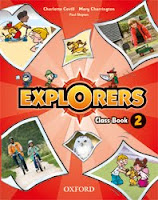
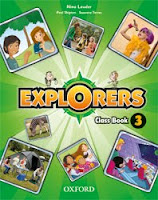
Today we are going to show you some resources from Oxford Explorers to learn in a fun way. If you visit this site or click on the images, you will find games, songs, stories and picture dictionaries that accompany your Class Book units from 1st to 3rd grade.

  https://elt.oup.com/student/oxfordexplorers/level2/?cc=global&selLanguage=en  https://elt.oup.com/student/oxfordexplorers/level3/?cc=global&selLanguage=en

This way, you can practise at home the grammar, the vocabulary and the songs also studied at school. For example, using the karaoke you can sing two of your favourite sons: «I love my family» or «Look at all the animals».


6 Apr 2015

To be, or not to be


You know that the verb «to be» means «ser» (I am a student) or «estar» (I am in the kitchen). It isn’t difficult. You can be sure that you don’t need a thinking cap. ;-) 

Look at its affirmative, interrogative and negative forms.


If you would like to study and practise it, you can do it in these links: curso-ingles.com and english4u.com.